What To Do If Your Car Key Stops Working Without Warning
Car keys rarely fail at a convenient moment. One day everything works as normal, the next your car will not unlock, will not start, or refuses to recognise the key at all. For many drivers, this comes as a shock, especially when the key appears undamaged. Understanding why keys fail and knowing what to do next can save time, stress, and unnecessary expense.
Modern vehicle keys rely heavily on electronics. Even traditional looking keys often contain transponder chips or remote locking circuits that are sensitive to wear, moisture, and battery condition. When something goes wrong internally, failure can appear sudden even though the problem has been developing for some time.
Common Reasons Car Keys Stop Working
One of the most common causes of key failure is battery degradation. Remote fobs and smart keys rely on small batteries that weaken gradually. Cold weather accelerates this process, which is why many key issues appear during autumn and winter. A battery may still power the buttons but fail to transmit a strong enough signal to the immobiliser system.
Physical wear is another frequent issue. Keys are dropped, sat on, knocked, and exposed to moisture far more than most drivers realise. Over time, solder joints crack, transponder chips loosen, and internal components fail. Even if the casing looks intact, internal damage can prevent the vehicle from recognising the key.
Water exposure is particularly damaging. Rain, condensation, washing machines, and even pockets can introduce moisture that corrodes internal circuits. The effects are not always immediate, which can make diagnosis confusing.
Why The Car May Not Start Even If The Key Turns
Many drivers assume that if the key turns in the ignition, the problem cannot be the key itself. In modern vehicles, this is no longer true. The mechanical blade and the immobiliser system are separate. The engine will only start if the vehicle recognises the transponder chip or smart key signal.
If the immobiliser cannot authenticate the key, the engine will remain disabled even though the steering unlocks or the ignition turns. Dashboard warning lights are often the first clue that the issue is electronic rather than mechanical.
What You Should Do First
If your key stops working, the first step is to try a spare key if you have one. If the spare works, this confirms the problem lies with the original key and not the vehicle itself. Unfortunately, many drivers do not have a spare, which immediately complicates the situation.
If the vehicle uses a remote or smart key, replacing the battery is worth trying, but it is not always the solution. If a new battery does not restore function, further attempts can risk locking the vehicle completely or triggering security systems.
Avoid forcing the key, repeatedly cycling the ignition, or attempting DIY fixes. These actions can sometimes cause additional faults or make professional recovery more difficult.
Why Professional Diagnosis Matters
Modern vehicles store security data in multiple control modules. Guesswork can lead to unnecessary costs. A professional auto locksmith can quickly determine whether the issue lies with the key, immobiliser, body control module, or another electronic component.
In many cases, a failing key can be repaired, reprogrammed, or cloned without replacing everything. Acting early often keeps costs lower and prevents complete key loss scenarios.
Preventing Key Failure Before It Happens
The best prevention is preparation. Having a spare key made while your original is still working gives you a backup if failure occurs. It also allows issues to be resolved calmly rather than during an emergency.
Keys should be kept dry, protected from impact, and checked periodically for signs of wear. If buttons become intermittent or the car occasionally fails to recognise the key, this is an early warning sign and should not be ignored.
As winter approaches, electronic failures become more common. Cold temperatures expose weak batteries and marginal components, increasing the risk of sudden key failure during the busiest and most inconvenient times of year.
Final Thoughts
A car key that stops working without warning is frustrating, but it is rarely random. Most failures are the result of gradual wear that eventually reaches a tipping point. Acting early, having a spare key, and using a professional auto locksmith can prevent long delays and high costs.
Rush Auto Locksmiths provides expert car key diagnostics, repairs, replacements, and spare key creation. We operate 24 hours a day, 365 days a year, including over the festive period, and we attend in all weather conditions.
If your car key has stopped working or is showing signs of failure, contact Rush Auto Locksmiths on 07482 546011 for fast, professional assistance.
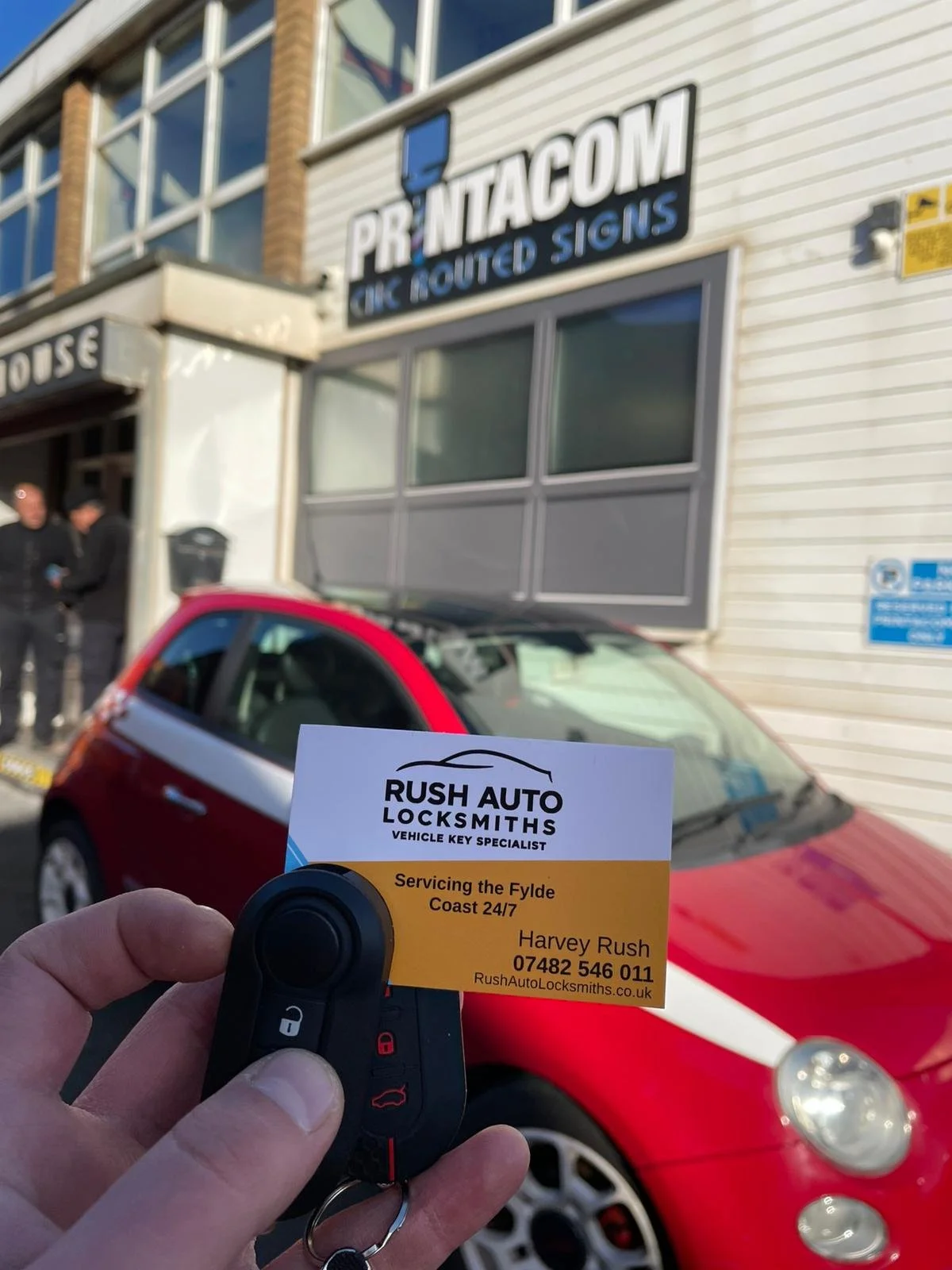
Fiat 500 spare key creation